





In today’s business landscape, one of the fastest-growing operational expenses for organizations is workforce cost.
This includes:
Especially for organizations operating across large-scale environments or complex infrastructures such as:
As organizations expand, these costs continue growing as long-term fixed operational expenses.
The key challenge for modern enterprises is no longer simply:
“How can we reduce costs?”
but rather:
“How can we transform these fixed costs into intelligent systems that improve operational performance?”
This is where technologies such as Automation, Edge AI, and AI Security Systems are reshaping industries worldwide.
Organizations are shifting from:
“Using people to maintain operations”
to
“Using intelligent systems to help people work more efficiently.”
Although human resources remain essential, many industries are struggling with challenges such as:
Especially in areas such as:
which require continuous surveillance and operational oversight.
Many organizations are realizing that simply increasing manpower is no longer a sustainable long-term solution.
Today, Automation no longer means simply:
“Machines replacing humans.”
Modern automation refers to systems capable of:
through AI and real-time operational intelligence.
Examples include:
These technologies are becoming foundational components of Intelligent Operations in modern enterprises.
What makes modern automation systems fundamentally different is the integration of Edge AI.
Instead of sending all operational data to cloud servers for delayed processing, Edge AI enables systems to process information directly at the operational site through:
The result:
This forms the foundation for enterprise-grade automation systems capable of operating in real-world environments.
Many organizations still rely heavily on manpower for:
Automation allows these tasks to be handled intelligently and autonomously.
Examples include:
This significantly reduces overtime expenses while improving workforce productivity.
One of the most expensive hidden operational costs is human error.
Examples include:
AI-powered automation systems can detect:
in real time.
This helps organizations significantly reduce operational risks and accident-related costs.
Intelligent systems help organizations:
All of these directly improve productivity and operational efficiency.
Modern automation systems do more than simply monitor environments.
They can also help organizations:
This is where AI Security and Intelligent Monitoring systems are becoming part of broader Business Intelligence strategies.
In the past, security infrastructure was often fragmented:
Today, organizations are shifting toward:
“Unified Intelligent Operations”
where all systems work together seamlessly in real time.
Examples include:
All connected through AI and automation technologies.
This allows organizations to manage security, safety, and operational efficiency from one intelligent ecosystem.
In the future, the most competitive organizations will not necessarily be those with the largest workforce.
They will be organizations capable of leveraging:
to maximize operational performance.
This is why automation is becoming a foundational technology for:
worldwide.
Because modern organizations are no longer focused only on reducing costs.
They are focused on building systems that are:
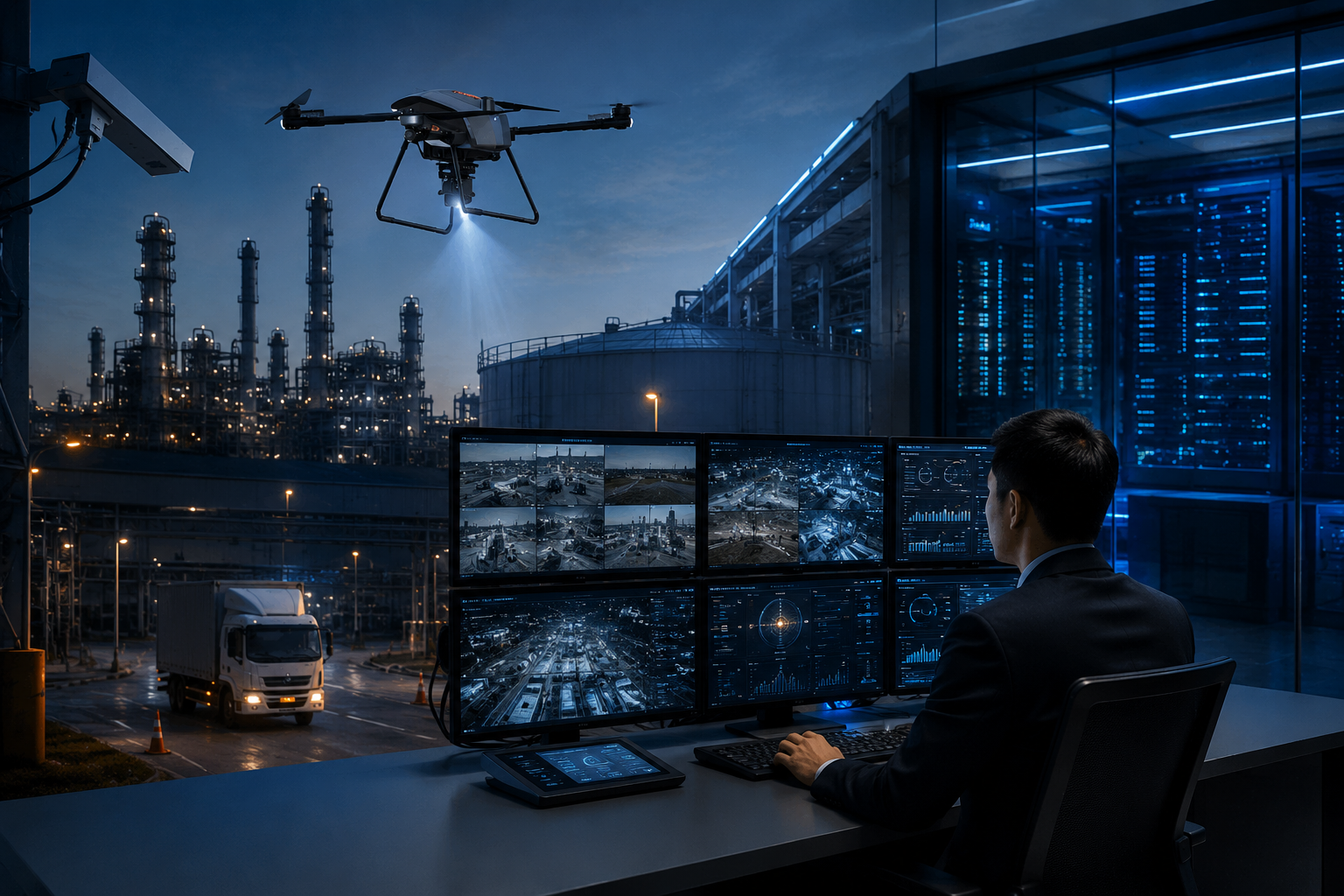
Reducing repetitive work through automation also requires clear human roles and handover steps. An intelligent operations system should bring this information into an Integrated Operation Center (IOC) around the organization's actual workflow, retaining operator review and decision-making.
Automation and Edge AI are no longer simply emerging technologies.
They represent a new operational strategy for organizations seeking to:
This is the future of Intelligent Operations that is reshaping industries worldwide.




We’re ready to help your team take the next step in safety, sustainability, and smart operations.