





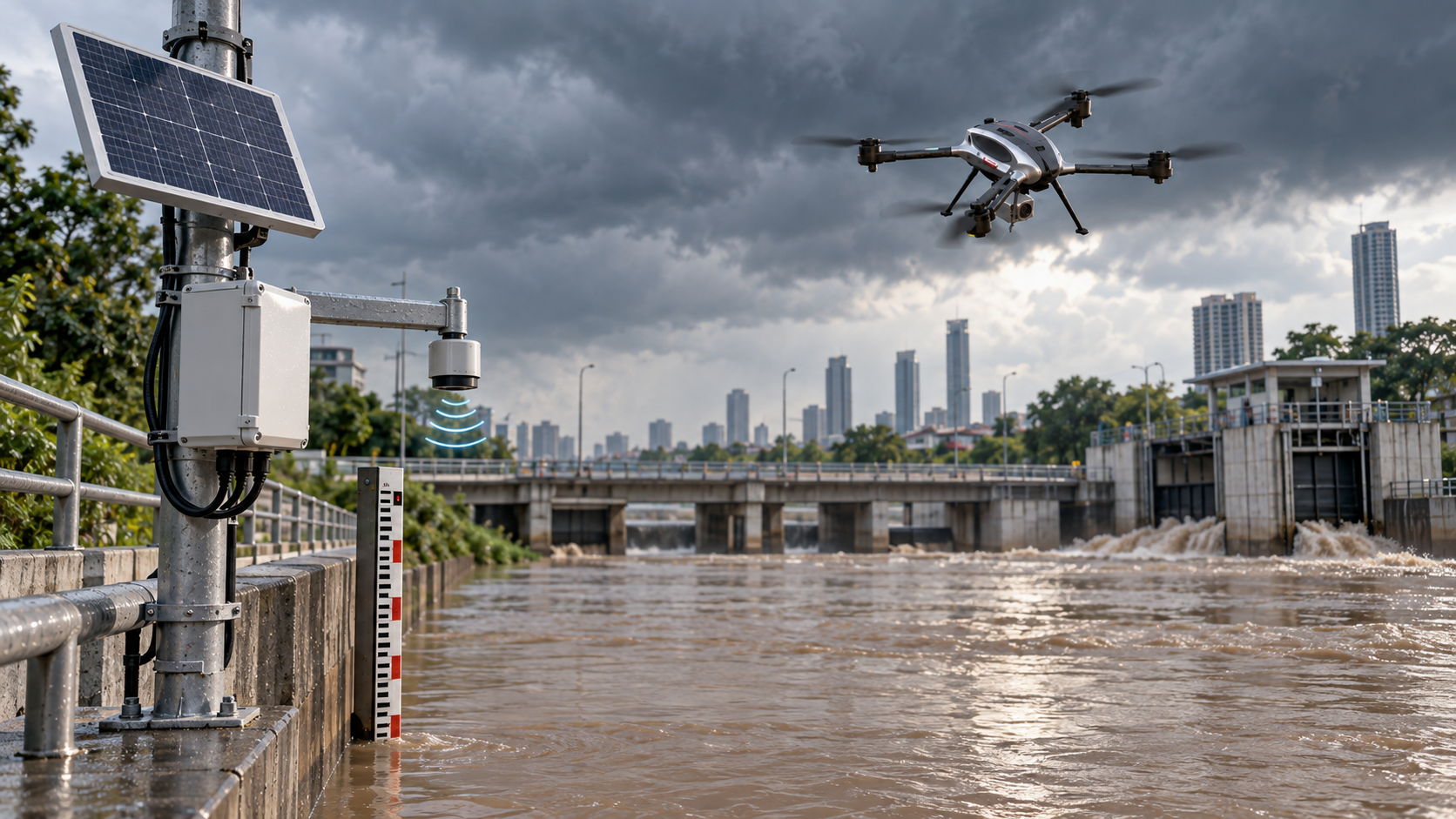
In countries where rain comes fast and water rises even faster, knowing before is everything.
Yet many flood-prone areas still rely on centralized data that arrives too late.
Canal One’s Water Level Monitoring solution puts an “intelligent brain” at the frontline – measuring water levels in real time and automatically alerting the people who must decide, so teams can act before water overtops dikes or floods critical areas.
ASAP (All Smart AI Platform) is an AI platform that works with your existing devices to analyze, distinguish, and detect abnormal event trends across:
It combines Water Level Monitoring, Air Quality, and Temperature Monitoring in a single system, and can automatically contact the responsible agencies once predefined severity thresholds are reached.
Process at the network edge (Edge AI) to reduce latency from sending everything to the cloud.
Ideal for sites with unstable or intermittent connectivity.
Store only the data that’s necessary, reduce unnecessary cloud transmission, and combine cyber + physical signals into a single view via the Unified Security System.
Send alerts to a wide range of field devices—such as radios, sirens/strobes, and mobile phones—so information reaches teams faster and responses stay on time.
ASAP supports Multi-Platform & IoT Integration, connecting:
…into one platform, without vendor lock-in, and can be scaled site by site based on risk and budget.
Get early warning of canals and drainage channels nearing overflow, enabling faster road closure, rerouting, and community alerts.
Monitor flood risk in loading/unloading areas and plant rooms, and trigger automatic SOPs for utility and maintenance teams.
Combine water-level data with cameras and other sensors in a Smart Integrated Operation Center (IOC) to support faster, more accurate decisions.
Canal One’s approach combines AI Green Tech to:
Water-Level Monitoring on the ASAP Platform changes the game from “just monitoring” to “true prevention” with:
…helping reduce life and economic losses in the critical minutes that matter most.
Water-level data better supports response when teams can see both the trend and locations requiring inspection. This is a practical context for an Integrated Operation Center: an intelligent, integrated situation-management center designed to connect information and coordinate the people responsible.
Why use AI instead of simple water-level sensors?
A basic sensor only “knows the number”—it doesn’t act.
ASAP uses AI to analyze trends, apply alert thresholds, and link to SOPs/Automation so field devices (sirens, announcements, barriers, etc.) can be triggered immediately.
If the internet goes down, can it still alert?
Yes. With an Edge-first design, processing and alerts happen on-site, reducing cloud dependence—ideal for unstable connectivity areas.
Which channels can alerts use?
Mobile, apps, radios, sirens/strobes, and any channels your team selects according to your organizational workflows.
Can the system send drones to inspect flood-prone areas?
Yes. When upgraded to ASAP+, it can automatically dispatch drones to check water routes and high-risk zones, then stream visual confirmation back to the command




We’re ready to help your team take the next step in safety, sustainability, and smart operations.