





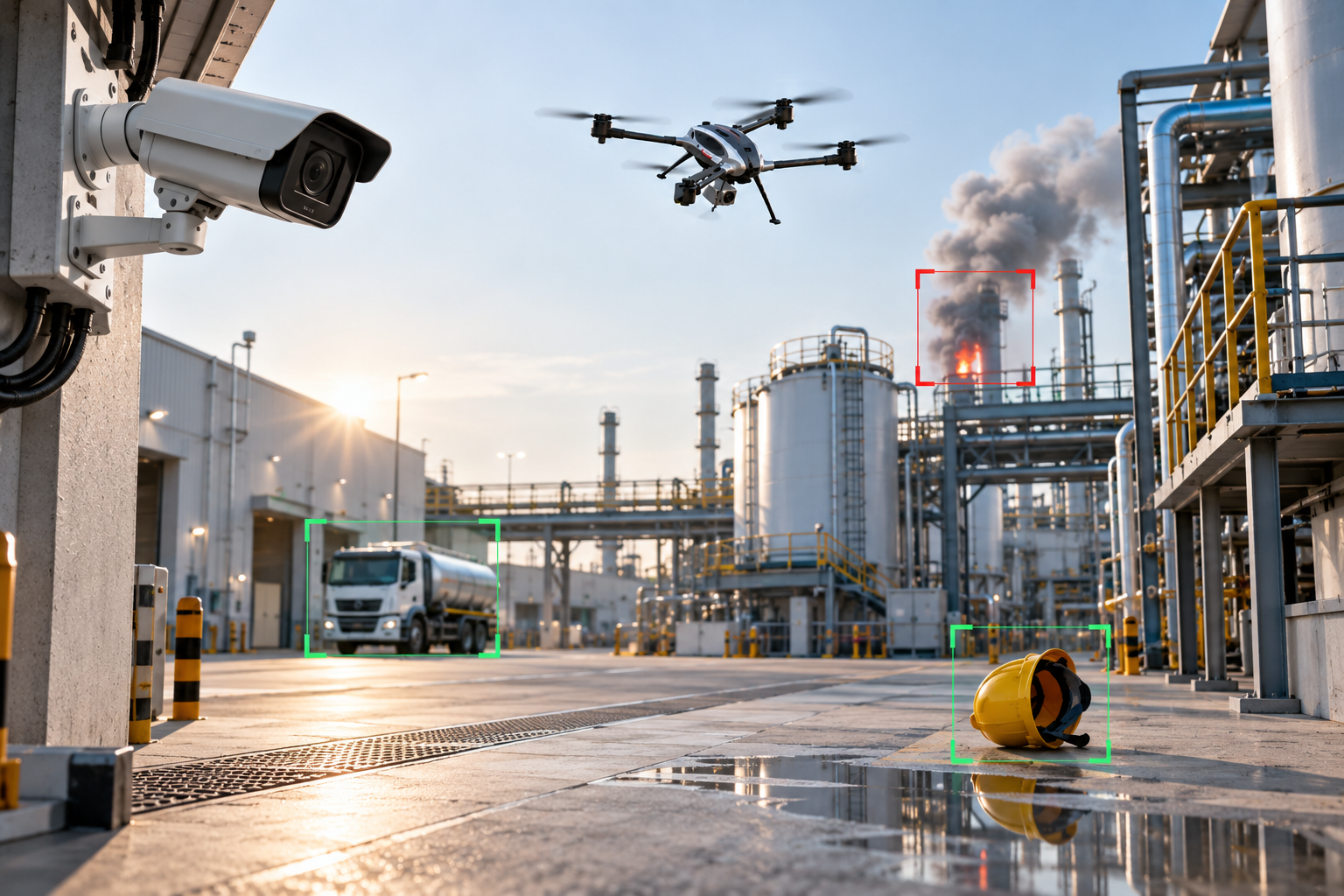
Many organizations still view workplace accidents as occasional incidents.
But in reality, a single accident can create enormous operational and financial consequences that impact businesses far beyond the immediate event itself.
These impacts may include:
In an era where organizations must balance both safety and operational efficiency, the critical question is no longer:
“How do we respond after an incident occurs?”
but rather:
“How can we prevent incidents before they happen?”
This is why Edge AI is becoming a key foundation of modern AI Security & Safety systems.
Because today’s intelligent systems can detect, analyze, and respond to abnormalities from the very first second before minor incidents escalate into major operational disasters.
Many organizations calculate accident costs based only on visible losses such as:
However, the real impact often comes from hidden operational costs.
When incidents such as fires, leaks, or industrial accidents occur, organizations may be forced to temporarily halt operations.
This can lead to:
Many incidents are caused by:
The cost of human error is often underestimated — and without intelligent systems, these risks can continue repeating.
Organizations with insufficient safety control may face:
Especially in industries with strict compliance and workplace safety requirements.
Edge AI refers to artificial intelligence processing performed directly at the operational edge or near the incident location itself.
Examples include:
Instead of sending all data to cloud servers for delayed processing, Edge AI enables systems to:
Think, analyze, and respond instantly
within milliseconds.
This capability is critical in safety operations because:
“The first few seconds often determine the severity of an incident.”
Edge AI systems can instantly analyze video and sensor data to detect:
The system can immediately notify personnel without waiting for operators to manually identify incidents.
Traditional monitoring systems often require operators to watch dozens of screens simultaneously.
This creates risks such as:
Edge AI automatically filters and prioritizes critical events, allowing teams to focus only on high-risk situations.
Modern safety systems no longer stop at simply sending alerts.
They can integrate with automated response systems such as:
This significantly reduces response times during emergencies.
In the past, many organizations operated under a:
“Reactive Security”
approach — waiting for incidents to happen before responding.
Today, modern organizations are shifting toward:
“Proactive Security”
where risks are detected and managed before escalation occurs.
Edge AI is a core driver of this transformation because systems can recognize abnormal patterns faster than humans can.
Examples include:
before incidents become critical emergencies.
Many organizations invest heavily in surveillance cameras but still experience recurring safety issues.
Because traditional CCTV systems are designed primarily to:
“Record footage”
while Edge AI transforms them into:
“Real-time intelligent decision-making systems.”
This is why organizations worldwide are increasingly adopting:
as part of modern security infrastructure.
In the future, security systems will no longer be viewed solely as operational expenses.
They will become intelligent ecosystems that support:
Organizations capable of detecting and responding to incidents faster will gain significant advantages in both safety and competitiveness.
This is why Edge AI is becoming a foundational technology for:
worldwide.
When accident risk is detected, teams need site context and a clear way to contact the responsible personnel. An Integrated Operation Center (IOC) developed as a Smart IOC should connect this information with team verification and coordination, so awareness leads to an appropriate next action.
Edge AI is not just another emerging technology.
It represents a shift in security philosophy — from:
“Responding after incidents occur”
to
“Preventing incidents before they happen.”
With real-time analysis and intelligent automated response, organizations can reduce:
while building safer, smarter, and more sustainable environments for the future.




We’re ready to help your team take the next step in safety, sustainability, and smart operations.