





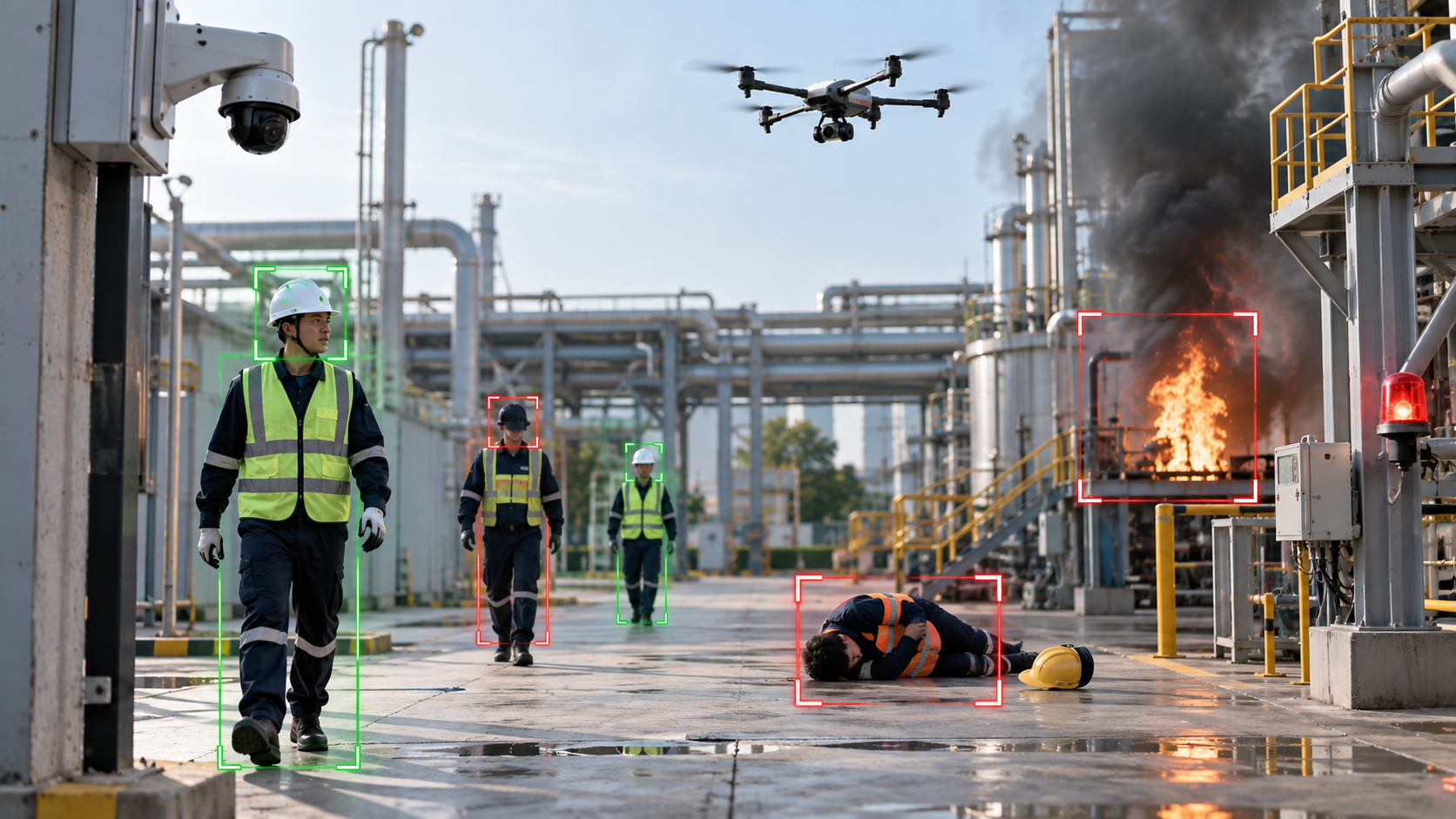
When a single second can be the difference between a “near miss” and a real incident, organizations need a system that can see early, warn in time, and trigger action immediately—not just flash alerts on a screen.
ASAP (All Smart AI Platform) is built to reduce loss under the Safety – Security – Environment concept and can automatically contact the responsible teams, so operations keep running safely and efficiently—without having to “roll the dice” on human-only systems.
ASAP is a centralized safety management platform that uses AI alongside your existing equipment to analyze, differentiate, and detect abnormal event patterns.
It covers:
…with add-on services and consulting for SOPs, notifications, and reporting—all in one system.
ASAP detects helmets, safety glasses, gloves, reflective vests, etc., and sends automatic alerts to the devices your teams actually use—including security radios.
This reduces human error and raises safety discipline on the ground the moment a violation is detected.
Video-based smoke and flame detection works together with your Fire Alarm System to trigger response plans according to SOP—from sounding sirens and blocking areas to calling support teams.
All of this is backed by real-time alerts sent through the channels you choose.
ASAP supports detection of falls and accidents in high-risk areas, cutting the time needed to locate the incident and start rescue actions.
It’s paired with a Smart Alerts & Incident Management framework that shows automatic SOP recommendations, so teams can act immediately.
Choose alert channels that match your real workflows:
The experience is field-tested with real users to stay easy to use across all shifts.
Unlike systems that leave everything to manual handling, ASAP focuses on Automated Incident Response:
A Smart Integration architecture combines physical and cyber signals into a single view, and supports Edge AI Processing to:
ASAP stands out with:
With PPE, fire, and accident detection connected to On-the-Go notifications and automatic SOPs on ASAP Platform, organizations in Thailand can move from reactive to proactive safety:
See first – warn first – act first
so everyone can go home safely, every day.
PPE, smoke and accident events need notification routes suited to their urgency and responsible teams. An intelligent operations system should bring this information into an Integrated Operation Center (IOC) around the organization's actual workflow, retaining operator review and decision-making.
How does PPE Detection make things safer in practice?
It checks in real time whether staff are fully equipped and sends automatic alerts (including to radios) so supervisors can correct behavior immediately, reducing risk in critical areas.
How is Smoke & Fire AI different from a normal Fire Alarm?
It detects from video, letting you see issues before they spread, and works with your Fire Alarm System to trigger automatic SOPs and On-the-Go alerts to relevant personnel.
Can it detect accidents/falls?
Yes. ASAP includes Fall / Accident Detection for high-risk zones, helping you locate the incident quickly and start assistance faster, with full linkage to Incident Management in one system.
Does it support automatic control and drones?
Yes. ASAP comes with Automated Incident Response, and when upgraded to ASAP+, it can dispatch drones automatically to inspect areas, confirm incidents, and support field teams.
If the internet goes down, does the system still work?
Yes. With an Edge-first architecture, processing happens on-site, reducing cloud dependency, while still tying into the overall view via the Unified Security System when connectivity is available.




We’re ready to help your team take the next step in safety, sustainability, and smart operations.